
How To Smoke Brisket on a Traeger: The Best Smoked Brisket Recipe
Kyle here. If you’ve ever been overwhelmed and Googled “how to smoke a brisket on a Traeger”, this overnight Traeger brisket recipe removes the stress. This method delivers a tender, juicy Texas-style brisket using only two simple seasonings and steady heat. No injections. No spritzing. No BS.
This blog post may contain affiliate links, which means that we make a small commission for recommending products we use and love at no additional cost to you. Thanks for supporting us!
Why This Overnight Traeger Brisket Method Works
Cooking brisket low and slow overnight allows:
- Deep smoke flavor development
- Proper fat rendering
- Controlled progression through the stall
- Predictable finishing time with plenty of rest (no more family angry at you for finally serving dinner at 10:00pm).
This is a foolproof approach for pellet grills and is especially reliable for large briskets.

That’s it. Let the beef be the star.
Equipment Needed to Smoke a Brisket on a Traeger
Traeger pellet grill (or similar pellet smoker)
How to Cook an Overnight Brisket on a Traeger
Step 1: Trim & Season the Brisket
Start around 7:00-8:00 the night before. Make sure the kids are in bed. This bad boy needs your undivided attention. Pat the brisket dry, then trim your brisket. Fat cap 1/4″, remove any oxidized meat, round off the flat and remove the thick vein of fat on the point. Here’s a video for reference. Pat the brisket dry. Lightly coat all sides with paprika, then season GENEROUSLY with Killer Hogs BBQ Texas Brisket Rub.
Allow the brisket to sit for 30-60 minutes while the smoker heats to ensure the seasoning adheres to the meat.
Step 2: Start the Brisket Low Overnight
Preheat the Traeger to 180°F. Put on a fresh line of aluminum foil down on your drip tray. When was the last time you replaced it, you filthy animal?
Place the brisket on the grill fat side down between 9:00-10:00, insert a probe into the thickest part of the flat, and close the lid. Go to bed, you’re doing the Lord’s work.
Cook overnight at 180°F to allow smoke absorption and gentle fat rendering.
Step 3: Increase Temperature in the Morning
Good morning! It’s 5:00 and you can’t sleep any longer, because you’re dreaming about your brisket. Good. Enjoy the quiet house, make a cup of coffee, and go check on your masterpiece. Your family is so lucky to have you. Once the brisket reaches 145–150°F internal, increase the grill temperature to 225°F.
At this stage, the brisket will enter the stall, where internal temperature slows or stops rising. This is normal and necessary for tenderness. You’ll hover around 155-160°F for what feels like days. Relax, this is why we started the night before. Leave it alone, STOP opening that lid, and know the longer the stall the more tender the meat. And don’t even think about checking the temp in the point, that’s always going to run hotter. FAKE NEWS!
Step 4: Wrap the Brisket at the Stall
When the flat reaches about 165°F and the bark is dark and dry, wrap the brisket tightly in butcher paper. You’ve swaddled a baby, so this is easy.
Increase the grill temperature to 250°F to help push through the stall while protecting the bark.
Step 5: Finish to Tender
Continue cooking at 250°F until the brisket is probe-tender, usually between 203-205°F.
The probe should slide into the flat with butter-like resistance. Mine finished perfectly at 203°F.
Step 6: Rest the Brisket
Resting allows juices to redistribute and is essential for a moist brisket. Keep the brisket wrapped and rest in a cooler for 1–2 hours minimum. 2-4 hours is better, but this is your 3 hour flex window to be able to eat between 4-7 that evening. I’ve had plenty of cooks that I can only rest for an hour. Don’t worry, it’s still delicious. Ignore the meat snobs.
Subscribe to never miss a new recipe!

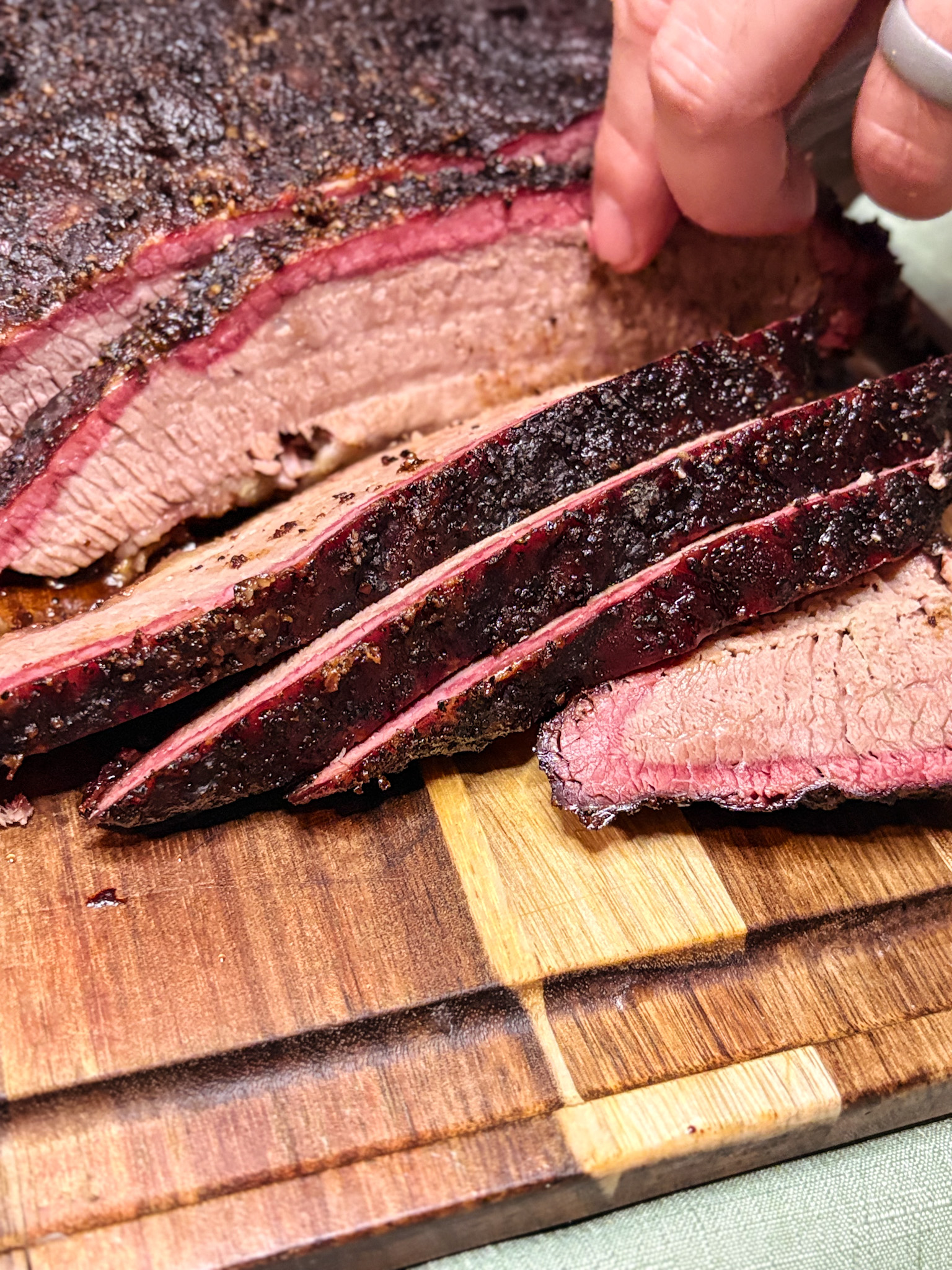
How to Slice Brisket for Best Result
- Separate the point and flat
- Slice the flat against the grain in pencil-thick slices
- Turn your brisket 90°. Slice the point thicker or cube if desired
Common Brisket Questions Answered:
What Is the Brisket Stall?
The stall occurs when evaporating moisture cools the meat as fast as the smoker heats it. This typically happens between 150–170°F and is part of proper brisket cooking.
Should I Spritz or Inject?
Not necessary for this method. The long cook, wrap, and rest provide plenty of moisture.
Tips for Perfect Traeger Brisket Every Time
- Don’t rush the stall
- Cook to tenderness, not just temperature
- Avoid excessive heat at the end
Adjustments for a Smaller Brisket (Under 15 Pounds):
If you’re cooking a smaller brisket, a few adjustments will help prevent overcooking:
Temperature Changes
- Keep the same 180°F overnight start
- Expect it to reach the stall earlier, so you can start later or wake up earlier
- Wrap closer to 160°F instead of 165°F
Timing Differences
- Total cook time will be shorter
- Start checking for tenderness earlier (around 190°F)
- Smaller briskets can finish quickly once wrapped
Rest Still Matters
- Rest at least 1 hour, even for smaller briskets
- A longer rest will still improve juiciness
Key Tip: Never rush a smaller brisket with high heat — they dry out faster than large packers.
Final Thoughts on Overnight Traeger Brisket:
This overnight Traeger brisket proves that great barbecue doesn’t require complicated techniques or a long ingredient list. With patience, simple seasoning, and steady heat, you can turn out a Texas-style brisket that’s tender, flavorful, and stress-free. If you’ve been hesitant to try brisket, this is the method to trust.
P.S. if you’re married, your wife may ask you to renew your vows after this cook. If you’re not, the scent may draw your future wife to you. You’re welcome.

A Note From Sid: If you’re looking to make a full meal with this brisket, don’t forget the sides! Don’t worry, got you covered. Here’s some recipes that would go great with this brisket!
➡️ A Simple Cucumber Salad
➡️ Easy Creamy Mashed Potatoes
➡️ Dijon Brown Sugar Glazed Roasted Carrots
Loved this recipe? Be sure to tag us @frontporchfreshon Instagram if you made it, we can’t wait to see! Want to Pin this recipe for later? Click the Pin It button on any of the images below! Happy cooking!


Simple Traeger Smoked Brisket
Ingredients
- 1 whole packer brisket (15-20lbs)
- Paprika
- Killer Hogs BBQ Texas Brisket Rub
Instructions
- Pat the brisket dry and trim the fat cap to about ¼ inch thick. Remove any oxidized meat and large hard pieces of fat. Lightly coat all sides with paprika, then season generously with Texas-style brisket rub. Let the brisket sit at room temperature for 30–60 minutes while the smoker preheats so the seasoning can adhere.
- Preheat the Traeger to 180°F. Place the brisket fat side down on the grill and insert a temperature probe into the thickest part of the flat. Cook overnight at 180°F to allow the brisket to slowly absorb smoke and begin rendering the fat.
- Once the brisket reaches an internal temperature of 145–150°F, increase the grill temperature to 225°F. The brisket will likely enter the stall around 155–165°F, where the temperature stops rising for a period of time. This is completely normal and helps create a tender finished brisket. Keep the lid closed as much as possible during this stage.
- When the brisket reaches about 165°F and the bark is dark and set, wrap it tightly in butcher paper. Increase the smoker temperature to 250°F to help push the brisket through the stall.
- Continue cooking until the brisket is probe-tender, usually around 203–205°F internal temperature. A thermometer probe should slide into the flat with very little resistance.
- Keep the brisket wrapped and rest it in a cooler or insulated container for at least 1–2 hours before slicing. Resting allows the juices to redistribute and helps ensure a moist, tender brisket.


